After falling behind the Los Angeles Lakers 3-0, the Houston Rockets have now won two games to force a Game 6.
from NBC News Top Stories https://ift.tt/wkZ1EuH
from NBC News Top Stories https://ift.tt/wkZ1EuH

SpaceX’s board approved a compensation plan for founder Elon Musk with goals as futuristic and celestial as the company’s ambitions: colonising Mars and running data centres in outer space.
The details of Musk’s sweeping pay package were revealed in the company’s confidential registration statement filed in recent weeks with the Securities and Exchange Commission and have been reviewed by Reuters.
The lofty rewards dangled for Musk by SpaceX show the challenge of holding the attention of the serial entrepreneur as he prepared to take the rocket maker public. They also potentially set up SpaceX investors for tensions with shareholders of Tesla, where Musk is chief executive officer (CEO), said corporate governance experts.
Connecting science-fiction visions with accounting commitments, the SpaceX board in January approved a pay package for the world’s richest man that would award 200 million in super-voting restricted shares if the company hit a market value of $7.5 trillion and established a permanent human colony on Mars with at least one million people, according to excerpts from the company’s registration statement reviewed by Reuters.
His Mars-shot performance package also gave him as many as 60.4m in restricted shares awarded on March 23, if SpaceX met separate valuation goals and operated data centres in space that provided at least 100 terawatts of compute capacity — a colossal amount of power equal to 100,000 gigawatts — or about 100,000 one-gigawatt nuclear reactors running all at once.
Both awards came with super-voting Class B restricted stock, which carried 10 votes to every one Class A share, and vested in tranches as the company’s value rose.
However, he would not receive a single share if the company failed to reach the board’s lofty valuation targets, which were not tied to a specific timeline other than his continued employment.
He received a nominal salary from SpaceX of $54,080 per year since 2019. The value of the pay package could not be determined since SpaceX is privately held.
SpaceX is targeting an initial public offering around the time of Musk’s birthday on June 28, which could value the company at some $1.75 trillion.
As of December 31, he held 68.8m in previously awarded Class B stock options with a strike price of about $42 that expires in 2031, allowing Musk to pocket any profit above that amount if he exercises the options before that date.
Musk is already worth $776 billion by Forbes’ estimate. SpaceX aside, he could more than double that if he achieves separate, ambitious performance goals at Tesla — the EV automaker he also runs. He owned about 20 per cent of that company’s stock as of November, according to the registration statement.
SpaceX and Tesla did not respond to requests for comment.
The Information and Reuters previously reported SpaceX paid targets for Musk linked to a Mars colony and to space data centres.
Executive compensation expert Eric Hoffmann, who is chief data officer for corporate governance consulting firm Farient Advisers, said he knew of nothing remotely comparable in compensation packages at other companies.
“I am not a physicist or astronomer, and I wouldn’t know where to start,” he said.
“The measuring stick is: has it been done in human history? These haven’t. So that’s hard. Now, SpaceX and Tesla are effectively competing over Musk,” Hoffmann added.
He noted how just last autumn, Tesla’s board argued it needed to pay Musk generously to keep him focused on the automaker. Musk, in fact, threatened to leave Tesla if shareholders failed to approve the plan, Tesla previously disclosed.
“What’s interesting about this situation is now, SpaceX and Tesla — both effectively controlled by Elon Musk — are now bidding against each other for his attention,” Hoffmann said.
Equilar Director of Research Courtney Yu also said the goals of colonising Mars and building space data centres stood out because he could not remember any other company aside from Tesla using metrics beyond standard financial ones, like measures of earnings or revenue to set CEO pay.
It is up to the boards of the respective companies — SpaceX and Tesla — to determine how best to structure Musk’s time, Yu said.
While a $7.5 trillion market capitalisation for SpaceX may seem extraordinary, Yu said in a telephone interview, “it does help with setting expectations for investors as to what the goals of the company really are”.
US President Donald Trump reiterated on Sunday that talks with Iran would be held remotely and commended Pakistan, which has been playing a mediatory role between Washington and Tehran, saying that Islamabad would “stay involved” in the process.
The US president’s remarks came during a phone interview with Fox News, where he said: “If they (Iran) want to talk, they can come to us, or they can call us; you know, there is a telephone … If they want they can talk, but we are not sending people to travel 18 hours to meet.”
His remarks come a day after he called off a planned visit of US Special Envoy Steve Witkoff and adviser Jared Kushner to travel to Islamabad for a second round of talks with Iran.
The first round of historic direct US-Iran talks was held in Islamabad on April 11 and 12, following a Pakistan-brokered ceasefire on April 8. It had ended without an agreement, but also without a breakdown.
Acknowledging Pakistan’s role in the process, Trump said, “Great respect for Pakistan because they have been terrific, they have really tried. So we are going to do it by telephone. If they (Iran) want, they can call us. But again, they know what has to be in the agreement; very simple, they cannot have a nuclear weapon. Otherwise, there’s no reason to meet.”
Pakistan’s civil and military leadership has been engaged in feverish diplomacy, seeking to bring the US and Iran back to the negotiating table after the first round of talks in Islamabad yielded no result.
The talks had taken place as a Pakistan-brokered ceasefire remained in place. It has now been extended by Trump until Tehran submits a “unified proposal” and “discussions are concluded, one way or the other”.
Meanwhile, the expected second round of negotiations witnessed a delay due to continued friction between the US and Iran, particularly regarding Iran’s closure of the Strait of Hormuz and the US blockade of Iran’s ports.
Unrestricted navigation through the Strait of Hormuz has emerged as one of the issues at the core of the impasse between the US and Iran. Another point of contention is Washington’s demand for long-term commitments on Iran’s nuclear programme, including constraints on enrichment and safeguards against weaponisation.
Hours after an Iranian delegation departed Islamabad, Prime Minister Shehbaz Sharif on Saturday spoke with Iranian President Masoud Pezeshkian and said that Pakistan was committed to serving as an “honest and sincere facilitator”.
In a post on the social media platform X, PM Shehbaz said that he had a “warm and constructive” call with the Iranian president on the evolving regional situation.
“I appreciated Iran’s continued engagement, including the high-level delegation to Islamabad led by Foreign Minister Abbas Araghchi, whom I had the pleasure of meeting earlier today,” he said.
“I reaffirmed that, with the support of friends and partners, Pakistan remains committed to [serving] as an honest and sincere facilitator — working tirelessly to advance durable peace and lasting stability in the region,” he said.
According to the Prime Minister’s Office (PMO), the phone call lasted 50 minutes, with the two leaders exchanging views on the “current regional situation and ongoing efforts to promote peace and stability in the region”.
It said that PM Shehbaz appreciated the participation of the high-level Iranian delegation in the Islamabad Talks held on April 11 and 12.
Further, the prime minister also welcomed Iran’s decision to send a delegation led by FM Araghchi to Islamabad.
“While sharing with the Iranian president an overview of his recent diplomatic outreach to a number of world leaders, the prime minister emphasised that these interactions had been helpful in building broader consensus in support of sustained dialogue and diplomacy aimed at achieving lasting peace in the war-affected region,” the PMO said.
It further said that the prime minister expressed appreciation for the fruitful discussions by the Iranian leadership with Chief of Defence Forces and Chief of Army Staff Field Marshal Munir during his recent visit to Tehran.
“While reassuring the Iranian president of Pakistan’s firm commitment to regional peace, the prime minister said that Pakistan would continue its sincere and honest endeavours to promote regional peace and security,” the statement said.
It added that Pezeshkian thanked the prime minister, CDF Munir and Deputy Prime Minister and Foreign Minister Ishaq Dar for their “significant contribution to the peace efforts”.
“While expressing Iran’s desire for peace, he also expressed confidence that the fraternal ties between Iran and Pakistan will continue to strengthen and expand in the future,” the statement said.
It added that the prime minister also conveyed his greetings and regards to Iranian Supreme Leader Ayatollah Mojtaba Khamenei.
“Both leaders agreed to continue their close coordination,” the statement concluded.
The first round of direct talks between the US and Iran was held in Islamabad on April 11 and 12, which ended after more than 20 hours without agreement but kept the diplomatic channel open.
Since then, exchanges have continued indirectly through Pakistan, with both sides calibrating positions while avoiding a formal breakdown.
The ceasefire, originally brokered around April 7 and 8, has been extended without a defined timeline, creating space for diplomacy but also prolonging uncertainty.
The foreign ministers of Pakistan and seven other Muslim-majority countries issued a joint statement on Thursday, rejecting any attempts to alter the historic and legal status quo in Jerusalem and its Islamic and Christian holy sites.
The foreign ministers condemned the “repeated violations of the historic and legal status quo at Jerusalem’s Islamic and Christian holy sites by Israeli occupation authorities”.
They particularly deplored the continued incursions by Israeli settlers and “extremist ministers into Al Aqsa Mosque/Al Haram Al Sharif under Israeli police protection, as well as the raising of the Israeli flag within its courtyards”, the joint statement citing the foreign ministers of Pakistan, Egypt, Turkiye, Indonesia, Jordan, Qatar, Saudi Arabia and the United Arab Emirates said.
“The ministers reiterated that these provocative actions at Al Aqsa Mosque/Al Haram Al Sharif, constitute a flagrant violation of international law and international humanitarian law, and represent an unacceptable provocation to Muslims around the world, and a flagrant violation to the sanctity of the holy city,” the statement read.
It added that the foreign ministers reaffirmed their “categorical rejection of any attempts to alter the historic and legal status quo in Jerusalem and its Islamic and Christian holy sites, and stressed on its preservation while recognising the special role of the historic Hashemite custodianship in this regard”.
They reiterated that the “entire area of Al Aqsa Mosque/Al Haram Sharif, which amounts to 144 dunams, is a place of worship exclusively for Muslims, and that the Jerusalem Endowments and Al Aqsa Mosque Affairs Department, affiliated with the Jordanian Ministry of Awqaf and Islamic Affairs, is the legal entity with exclusive jurisdiction to administer the affairs of the blessed Al Aqsa Mosque/Al Haram Al Sharif and to regulate entry thereto”.
The ministers further condemned the “accelerating illegal settlement activity, including Israel’s decision to approve over 30 new settlements, which constitutes a flagrant violation of international law, including United Nations Security Council resolutions and the 2024 advisory opinion of the International Court of Justice”.
They also condemned the continued and escalating settler violence against Palestinians in the occupied West Bank, including recent attacks on Palestinian schools and children, and called for those responsible to be held accountable, the statement said.
It added that the ministers emphasised that Israel had “no sovereignty over the Occupied Palestinian Territory”.
“They categorically rejected any attempts to annex the occupied Palestinian territory or to displace the Palestinian people.
“The Ministers stressed that such actions constitute a deliberate and direct attack on the viability of the Palestinian state and on the implementation of the two-state solution, increase tensions, undermine peace efforts, and hinder ongoing initiatives aimed at de escalation and the restoration of stability,” the statement read.
It said the foreign ministers reiterated their call for the the international community to uphold its legal and moral responsibilities and compel Israel to halt its “dangerous escalation” in the occupied West Bank, and to put an end to its illegal practices.
“The ministers called upon the international community to assume its responsibilities and take clear and decisive steps to halt these violations. They also called on the international community to intensify all regional and international efforts to advance a political solution that achieves a comprehensive peace based on the two-state solution.”
The statement said they further reiterated their “unwavering support” for the legitimate rights of the Palestinian people, particularly their right to self-determination and to realise the independent Palestinian state along the June 4, 1967 lines, with East Jerusalem as its capital.
The statement came two days after the latest storming at Al Aqsa Mosque by Israeli settlers. The settlers forced their way into the site through the mosque’s Mughrabi Gate, under heavy police protection, according to an Anadolu reporter.
Videos circulating on social media showed occupiers performing Talmudic rituals and prayers aloud, including what is referred to as “epic prostration”, particularly in the eastern area of the compound.
Photos shared online also showed two occupiers raising the Israeli flag inside the compound, with the Dome of the Rock mosque visible behind them.
On April 6, far-right Israeli National Security Minister Itamar Ben-Gvir had also stormed the Al Aqsa Mosque compound.
Palestinian news agency Wafa quoted the Islamic Waqf Department in Jerusalem as saying that the minister toured the mosque’s courtyards, entering through the Mughrabi Gate and proceeding to the Chain Gate before returning via the same route, amidst a heavy deployment of occupation police.
“He has stormed the mosque approximately 14 times since assuming his position in 2023, as part of an escalating policy towards the mosque,” the report said at the time.
Later, he again stormed the mosque on April 13 under heavy police deployment.
In March, Israeli police had prevented the Latin Patriarch of Jerusalem, Cardinal Pierbattista Pizzaballa, from entering the Church of the Holy Sepulchre in Jerusalem to celebrate Palm Sunday mass. Later, after widespread backlash, Israel said the Latin Patriarch of Jerusalem would regain access to Christianity’s holiest site.
Islamabad Deputy Commissioner Irfan Nawaz Memon on Sunday dismissed as fake on Sunday a notification announcing that all public and private offices in the federal capital and Rawalpindi would remain closed from April 20 until further notice.
In a social media post on X, Memon said, “Citizens are requested to refrain from sharing unverified or fake news. Please rely only on official handles of the district administration, Islamabad, for authentic updates.”
The statement comes as several other measures have been taken ahead of a possible second round of talks in Islamabad.
Islamabad’s Red Zone was closed for traffic as the capital braced to welcome foreign delegations, police said on Sunday, with alternate traffic plans issued to facilitate citizens.
Public and heavy transport are also suspended in Islamabad until further orders.
The Rawalpindi district administration also suspended all public and goods transport from Sunday noon till the next directives.
Advance teams have also started arriving in Islamabad, sources told Dawn.
More to follow
Five people were killed in Kyiv on Saturday after a gunman opened fire and took hostages at a supermarket in the Ukrainian capital before being killed during an arrest attempt, officials said.
Ukrainian President Volodymyr Zelensky said that at least 10 people were hospitalised with wounds and trauma after the shooting, which took place in a residential district in the city’s south.
Footage posted by the UNIAN news agency, which AFP was unable to immediately verify, showed a man carrying a gun and shooting at a person from close range near a block of flats.
The suspect then entered a supermarket where gunshots were heard, Kyiv mayor Vitali Klitschko said.
Four hostages from the supermarket “have been rescued”, Zelensky said later on social media.
“The attacker in Kyiv who opened fire on civilians has been eliminated,” Zelensky said, offering condolences to the families of the victims.
An AFP reporter saw the supermarket — which had blood stains on its shop window — cordoned off by a heavy security presence, with officers wearing bulletproof vests and crime investigators arriving at the scene.
The assailant’s motive was not immediately known.
Ukrainian Prosecutor General Ruslan Kravchenko said the suspect was a 58-year-old man born in Moscow and that, according to initial reports, “he used an automatic weapon”.
An employee of the supermarket, Tetyana, told AFP that she had heard sounds “in the store, like champagne being popped or balloons bursting several times. Then the customers started shouting, ’Run!’
“There’s a spot where you can hide behind the refrigerators, and we ran there. I heard a man moaning,” she recounted, her voice trembling.
Zelensky urged “a swift investigation” into the shooting and said that all the circumstances of the incident were being established.
Ukrainian Interior Minister Igor Klymenko said the standoff between the assailant and police negotiators at the supermarket lasted around 40 minutes.
“We tried to persuade him. Realising that there was likely an injured person inside, we offered to bring in tourniquets to stop the bleeding … But he didn’t respond,” Klymenko told reporters at the scene.
“That’s why the order was given to eliminate him,” he added, saying that the gunman had killed one of the people taken hostage.
Ukraine, which has been fighting a more than four-year-long war with Russia, has seen sporadic shooting incidents but has a relatively low crime rate.
Last year, a man shot dead two people in a Kyiv suburb in a dispute over the sale of a firearm.
HARIPUR: At least eight people, including children, were killed and 11 others were injured after a Sui Northern Gas supply line located near a factory burst and caught fire in the Hattar Industrial Estate of Khyber Pakhtunkhwa’s Haripur district, officials said.
The cause of the fire is yet to be determined.
Dr Munawwar Afridi from Haripur district headquarters hospital (DHQ), who is also associated with the rural health centre (RHC) in the Kot Najibullah union council, told Dawn that three of the bodies were brought to the DHQ and five others to the RHC.
Haripur Deputy Commissioner (DC) Waseem Ahmed told Dawn it appeared that the deaths were mainly caused by suffocation.
He separately told the media that the fire had engulfed three to four nearby houses located within a radius of 200 kilometres of the factory had been affected by the fire.
Muhammad Amir, an official of the Sui Northern Gas Pipeline Limited (SNGPL), told Dawn that the affected pipeline had a diameter of 16 inches and supplied gas to industrial estates up to Abbottabad towards the north. It was located near 400 residential quarters of Hattar Industrial Estate, he added.
Amir said while the cause of the fire was yet to be determined, area residents had informed the SNGPL about a “gas explosion and large fire” at around 6:30pm. He added that field teams rushed to the site of the incident upon receiving the information and found the pipeline on fire.
Amir said SNGPL teams, Rescue 1122 teams and personnel from other departments, including firefighters, participated in the operation to douse the blaze.
He said the SNGPL staff had cut off the gas supply to the pipeline, and yet dousing the blaze took at least two hours as rescue personnel faced difficulties due to the quantity of running gas in the supply line.
While the fire was blazing, flames could be seen from kilometres away, he said.
Amir further said that the supply line was located near the industrial estate’s factories, and it was presumed that the godowns in those units contained chemical material.
“Their leakage could have caused the fire,” he estimated, reiterating that the exact cause of the fire was yet to be determined.
DC Ahmed, who supervised the firefighting and rescue operation alongside Haripur District Police Officer (DPO) Shafiullah Khan, told Dawn that the fire was controlled after three hours of efforts.
Rescue personnel had also searched the site to ensure that there were no other casualties and no one was trapped at the site of the incident.
DPO Khan told Dawn that while the exact cause of the fire would be determined after investigation, circumstantial evidence showed that gas pressure could have caused an explosion in the supply line.
This is a developing story that is being updated as the situation evolves. Initial reports in the media can sometimes be inaccurate. We will strive to ensure timeliness and accuracy by relying on credible sources, such as concerned, qualified authorities and our staff reporters.
A historic meeting, 21 hours of negotiations, and one “final” offer.
Yet, the high-level ‘Islamabad Talks’ between the United States and Iran ended inconclusively early Sunday morning. Although commentators and analysts say the dialogue was unlikely to end any other way, the heart wants what it wants, and the entire world sat on the edge of their seats, hoping for nothing short of a miracle.
After a day and an entire night of talks, US Vice President JD Vance finally addressed journalists at a press briefing at 6:30am, where he announced the “bad news”.
“We have not reached an agreement, and I think that’s bad news for Iran much more than it’s bad news for the United States of America,” he said, elaborating that Iran had chosen “not to accept our terms”.
“We need to see an affirmative commitment that they will not seek a nuclear weapon and they will not seek the tools that would enable them to quickly achieve a nuclear weapon,” Vance added. Shortly after, he flew back to the US.
On the other hand, Iran’s Parliament Speaker Mohammad Bagher Ghalibaf, also the leader of the Iranian delegation in Islamabad, said they raised “forward-looking” initiatives, but the US failed to win their trust during the negotiations.
“The US has understood Iran’s logic and principles, and it’s time for them to decide whether they can earn our trust or not,” he wrote in a post on X.
In the US, President Donald Trump started his Sunday morning with a barrage of threats directed at Iran. “I could take out Iran in one day […] I could have their entire energy, everything, every one of their plants, their electric generating plants, which is a big deal,” he said, during a phone interview on the Fox News show ‘Sunday Morning Futures with Maria Bartiromo’.
Trump further announced that the United States Navy would begin the process of blockading vessels entering or leaving the Strait of Hormuz, citing concerns over maritime security and alleging that Iran had threatened shipping in the waterway.
Iran has dismissed the warnings, saying that it had complete control of the Strait of Hormuz.
But amid all the minute-by-minute developments, an urgent question remains unanswered: what next? What happened to the two-week ceasefire that pulled the world back from the end of “a whole civilisation”?
According to journalist and analyst Zahid Hussain, the ceasefire would hold for now and the negotiations were likely to continue, at least through backchannel talks. “They have failed to reach an agreement but are discussing a number of issues,” he told Dawn.
Hussain pointed out that there were two points where a deadlock persisted between the US and Iran: nuclear weapons and the Strait of Hormuz. “We were expecting the talks to lead to an extension in the ceasefire or some kind of agreement to resume negotiations.”
On the other hand, he continued, was Israel’s position. “Tel Aviv had grudgingly and conditionally accepted the ceasefire,” the journalist recalled, adding that ever since the talks concluded, Israel had escalated the bombardment of Lebanon.
“There are fears that they could do the same with Iran as well, which could lead to a compelling situation,” he said. “But there are signs that backchannel negotiations will continue and Pakistan could still play the role of a negotiator.”
In an Al Jazeera report, Washington-based journalist John Hendren expressed a similar opinion, saying Trump’s decision to send Vance to Islamabad showed the seriousness with which the US was taking these talks.
“The fact that Vance left doesn’t necessarily mean that the talks are over,” he said. “The US has been negotiating with Iran over time. Those talks can continue remotely, and leaving those talks may simply be a hard stance.”
Speaking to Dawn over the phone, journalist Baqir Sajjad said that if the ceasefire holds, the immediate phase was likely to be one of “cautious pause rather than visible movement”.
“Both sides appear to have used the Islamabad round to clarify positions, and any follow-up engagement would now depend on internal reassessments in Washington and Tehran. Diplomacy may continue, but in a quieter, more incremental manner, possibly focusing on limited understandings before attempting a wider settlement,” he said.
In case the ceasefire doesn’t hold, Sajjad highlighted, the risk was that of a return to escalation, with both sides seeking to improve leverage before returning to the table.
“Developments around the Strait of Hormuz or in peripheral theatres could become triggers. In such a scenario, the space for diplomacy would narrow, at least in the short term, even though backchannel contacts may remain active,” he added.
Meanwhile, writer and political analyst Trita Parsi, in an interview with CNN, noted that only six days had passed into the two-week ceasefire.
“More rounds may occur since neither side has rejected further talks,” he said. “And perhaps neither side wanted an agreement right away, since it could give the impression that they gave in too quickly.”
“Still, the most likely outcome is no deal, but also no return to a US-Iran war,” he added.
Commenting on Trump’s threat of closing down the Strait of Hormuz, Iran’s foreign and security policy expert Hamidreza Azizi said, “One should not forget that in the past 40 days, Iran has been able to ship and sell its oil through the strait, while other oil-producing countries in the region have not.”
“This means Iran is already 40 days ahead of others.”
Similarly, Iranian-American academic Vali Nasr wondered if Trump’s naval blockade was aimed at escalating pressure on Iran as a prelude to another round of talks.
“And Iran’s response? It could be pressure on shipping in the Red Sea? This is now even more than before a test of endurance between the US and Iran,” he wrote in a post on X.
Currently, even though the ceasefire holds, analysts have called it fragile. Fatemeh Aman, Iran-Pakistan expert and senior fellow at the Atlantic Council, told DW that the ceasefire was not based on a political agreement.
“It reflects a temporary pause shaped by caution and short-term calculations. Both sides are managing the situation rather than resolving it.”
And this is why, it is all the more important that the truce holds and mediation channels remain intact, she said, adding that “without a follow-up diplomatic process, the ceasefire remains exposed”.
“Neither side wants to appear as conceding after a failed round. There will likely be a pause as both reassess their position and leverage. If talks resume, they are unlikely to begin with the most difficult issues.
“They will likely start with narrower, technical steps that reduce risk without requiring major concessions,” she added.
Header image: Demonstrators flags of Iran and Lebanon during a protest against US military action in Iran near the White House in Washington, DC. — AFP
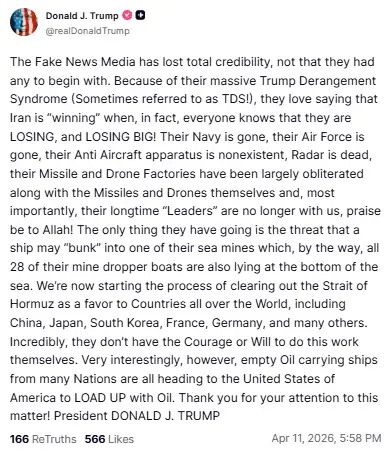
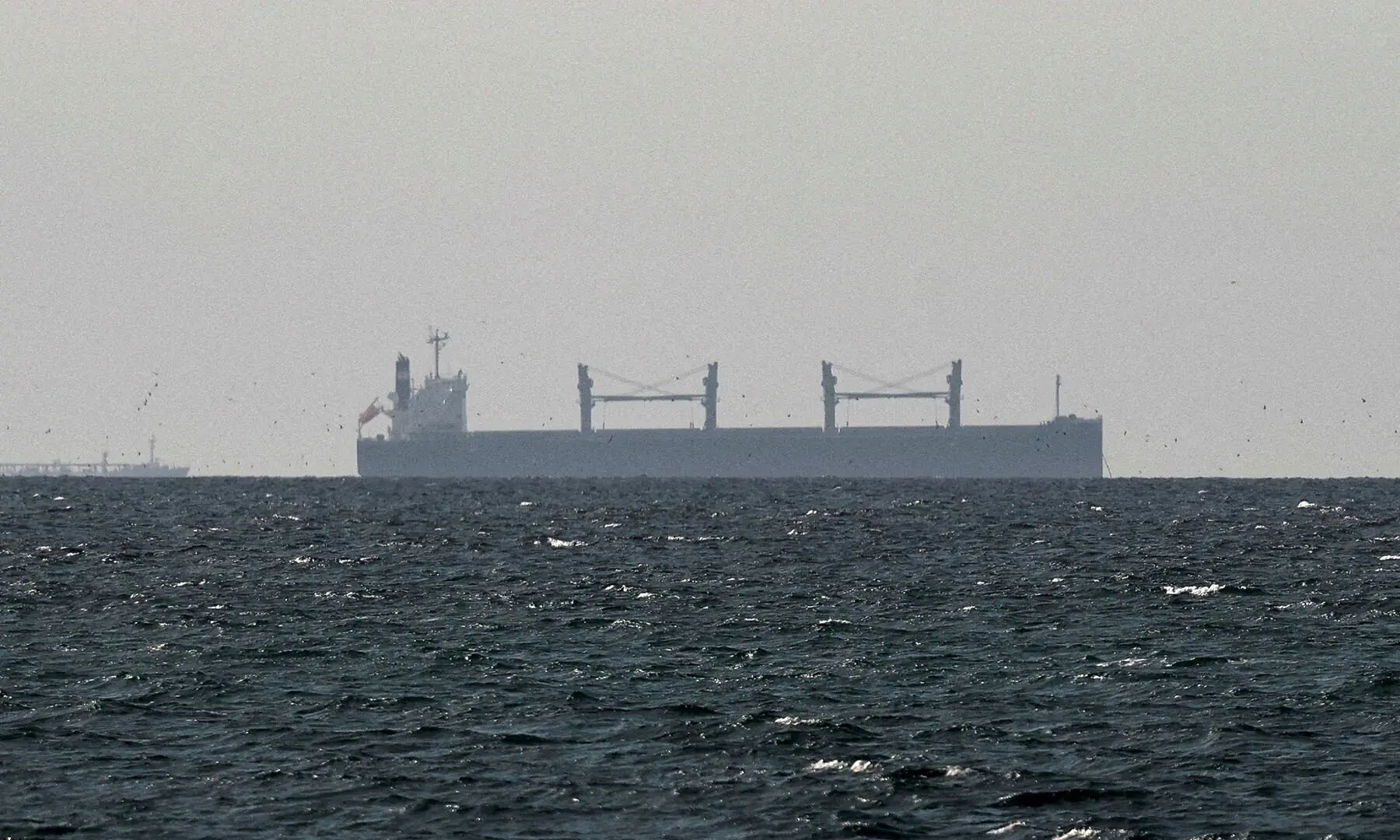
Two US Navy warships transited the Strait of Hormuz at the start of an operation to clear the strategic waterway of mines laid by Iran, US Central Command (Centcom) said on Saturday.
The announcement — which marks the first such transit since the US-Israeli war on Iran began — came shortly after President Donald Trump said Washington had started “clearing out” the strait, through which a fifth of the world’s crude oil passes.
“Today, we began the process of establishing a new passage and we will share this safe pathway with the maritime industry soon to encourage the free flow of commerce,” said Centcom commander Admiral Brad Cooper.
The USS Frank E Peterson and the USS Michael Murphy are the guided-missile destroyers involved in the operation, but Centcom said that “additional US forces including underwater drones” could join the effort in coming days.
Earlier, US media outlet Axios reported that the operation was not coordinated with authorities in Tehran.
“We’re now starting the process of clearing out the Strait of Hormuz,” Trump said on his Truth Social platform, calling it “a favour” to countries such as China, Japan and France that “don’t have the Courage or Will to do this work themselves.”
He insisted that Iran is “LOSING BIG!” in the conflict, while acknowledging that Iranian mines in the strategic strait still pose a threat.
“The only thing they have going is the threat that a ship may ‘bunk’ into one of their sea mines,” Trump wrote.
The key shipping lane off the coast of Iran has been virtually blocked by Tehran since the United States and Israel started bombing Iran on February 28, though reopening the strait was ostensibly a condition of the ceasefire put in place earlier this week.
Senior Iranian and American officials held face-to-face negotiations in Islamabad on Saturday in a bid to bring an end to a conflict that has plunged the Middle East into violence and sent shockwaves through the world economy.
In an earlier post, Trump said that empty tankers were headed to the United States from around the world to purchase oil, without providing details.
The Board of Secondary Education Karachi (BSEK) on Sunday announced that Secondary School Certificate (SSC) exams in Karachi were being rescheduled and would now commence on April 10.
The BSEK had earlier announced that SSC annual examinations would be held from April 7 to May 2 in the Karachi Division.
A press release issued by the BSEK on Sunday said citing the board’s controller of examinations that the board was currently transitioning from a manual to a digital system. “Therefore, the software application was overloaded and faced temporary disruption. The IT team is working to resolve the issue,” the press release said.
In view of the situation, the SSC examinations were being rescheduled to begin on April 10, 2026 to ensure that they were conducted in an “organised … and transparent manner,” the press release said.
It further said that a revised examination schedule would be issued soon, while students were to sit their exams at centres already allotted to them.
LAKKI MARWAT: Police registered on Sunday a first information report (FIR) against unidentified suspects for the rape and murder of a three-year-old girl in the Langerkhel Hathi Khan area of Khyber Pakhtunkhwa’s Lakki Marwat district.
The FIR, registered on behalf of the girl’s father at the Lakki city police station, invokes Sections 302 (intentional murder), 364-A (kidnapping/abducting a minor) and 376 (punishment for rape) of the Pakistan Penal Code.
According to the FIR, the girl had gone missing on April 3 (Friday), following which her family began searching for her. It said that the girl’s body was found in a reed forest located around two kilometres away from her village.
It quoted the complainant as saying that the girl’s “half-naked body was found on Sunday”.
Aliullah, 32, father of the victim, told police in his preliminary report that during a search, they found the half-naked body of his daughter in the nearby forest on Sunday. The body was taken to the Government City Hospital where a lady doctor confirmed that she was raped, he stated.
The FIR said Additional Station House Officer Fatehullah Khan reached the hospital after receiving information about the arrival of the girl’s body. It also quoted him as saying that a lady doctor confirmed after medical examination that the girl was raped before she was murdered.
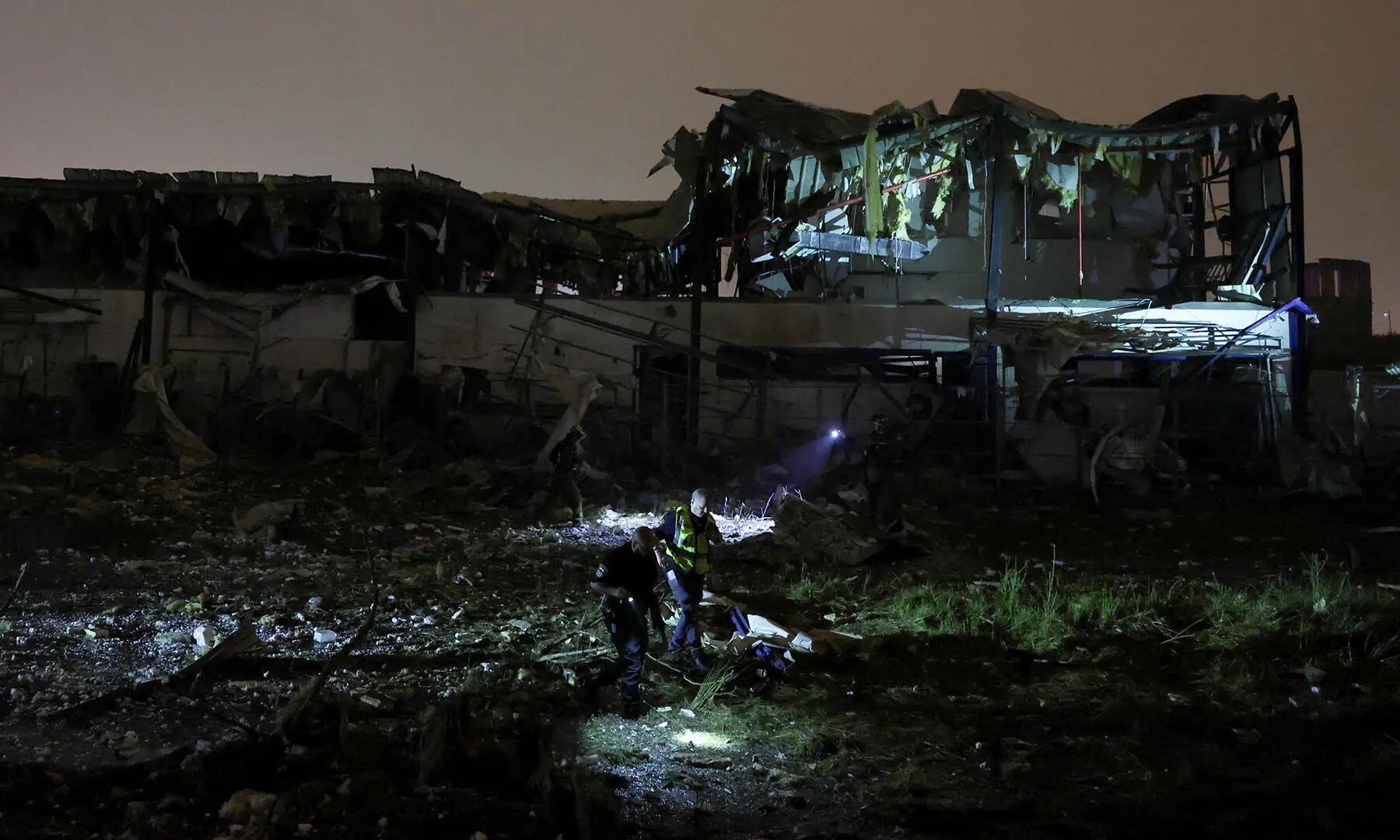
The 34th day of the US-Israel war against Iran unfolded in the immediate aftermath of US President Donald Trump’s speech, which, rather than opening any pathway to de-escalation, appeared to have hardened positions across the conflict spectrum. The remarks triggered swift Iranian retaliation, and reinforced a trajectory of sustained attrition with an increasingly central focus on economic pressure and maritime control.
In his speech, Trump declared that US and Israeli objectives were nearing completion, while committing to another two to three weeks of intensified strikes and warning that Iran could be pushed “back to the Stone Age” if it failed to reopen the Strait of Hormuz. Trump’s formulation looked to be a combination of coercive diplomacy and continued military escalation, even as it left ambiguity over the precise end state being sought.
The immediate Iranian response underscored the limited deterrent effect of the speech as Iran’s Islamic Revolutionary Guard Corps launched one of its largest single-night barrages in recent weeks within minutes of the address, including ballistic missiles targeting central Israel, particularly the Tel Aviv metropolitan area, alongside drone and missile strikes on Gulf targets. The Iranian response underscored both its capability and intent to escalate in parallel domains.
Over the past 24 hours, kinetic operations have continued at a high tempo. US and Israeli forces conducted multiple strikes across Iran, including more than 20 reported hits in the greater Tehran area as well as additional operations in Isfahan and Mashhad, and targeted maritime infrastructure such as facilities on Qeshm Island.
Strikes on the B1 bridge in Karaj and the century-old Pasteur Institute, which is also being described as an icon of Iran’s healthcare system, have, meanwhile, emerged as symbolically significant hits on civilian infrastructure. The Pasteur Institute attack was the latest in the series of attacks undertaken by the Israeli/US alliance on the Iranian pharmaceutical industry and healthcare facilities.
Iran, meanwhile, expanded the scope of its retaliatory campaign carrying out strikes against US and Israeli assets across the Gulf, including the destruction of early-warning radar systems in the United Arab Emirates, a hit on a tanker linked to Israel that was left burning, and attacks on US command facilities in Bahrain and Kuwait, alongside a drone swarm directed at USS Abraham Lincoln, which was subsequently reported to have re-positioned further into the Indian Ocean.
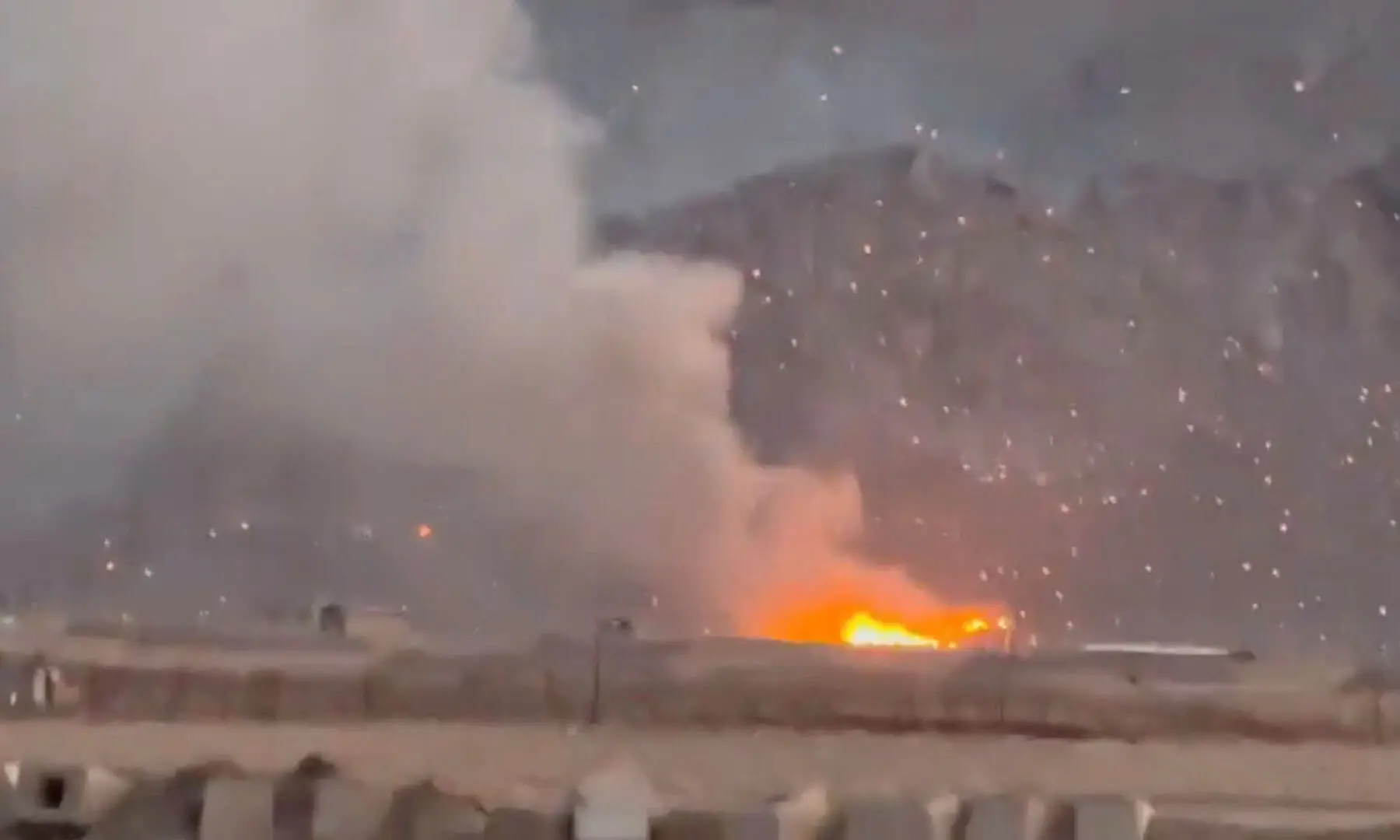
Proxy fronts also showed signs of qualitative escalation, where Hezbollah carried out its first use of longer-range Scud-type missiles from Lebanon targeting Israeli military installations, while the Houthis signalled their readiness to expand the maritime dimension of the conflict by potentially moving to close the Bab el-Mandab Strait if Gulf states increased their involvement.
Despite the intensity of operations, there were isolated indications of tactical adjustments, including the absence of US bomber sorties during a specific overnight window, which some Iranian sources interpreted as a sign of temporary restraint, though this remained unconfirmed by official channels and did not translate into any broader reduction in operational tempo.
On the political front, Iran’s leadership maintained a firm rejection of negotiations under current conditions, with senior figures reiterating demands for sanctions relief and compensation for war damages as preconditions for any talks, while official messaging framed the conflict as an existential defence and emphasised resilience in the face of attacks on civilian and scientific infrastructure.
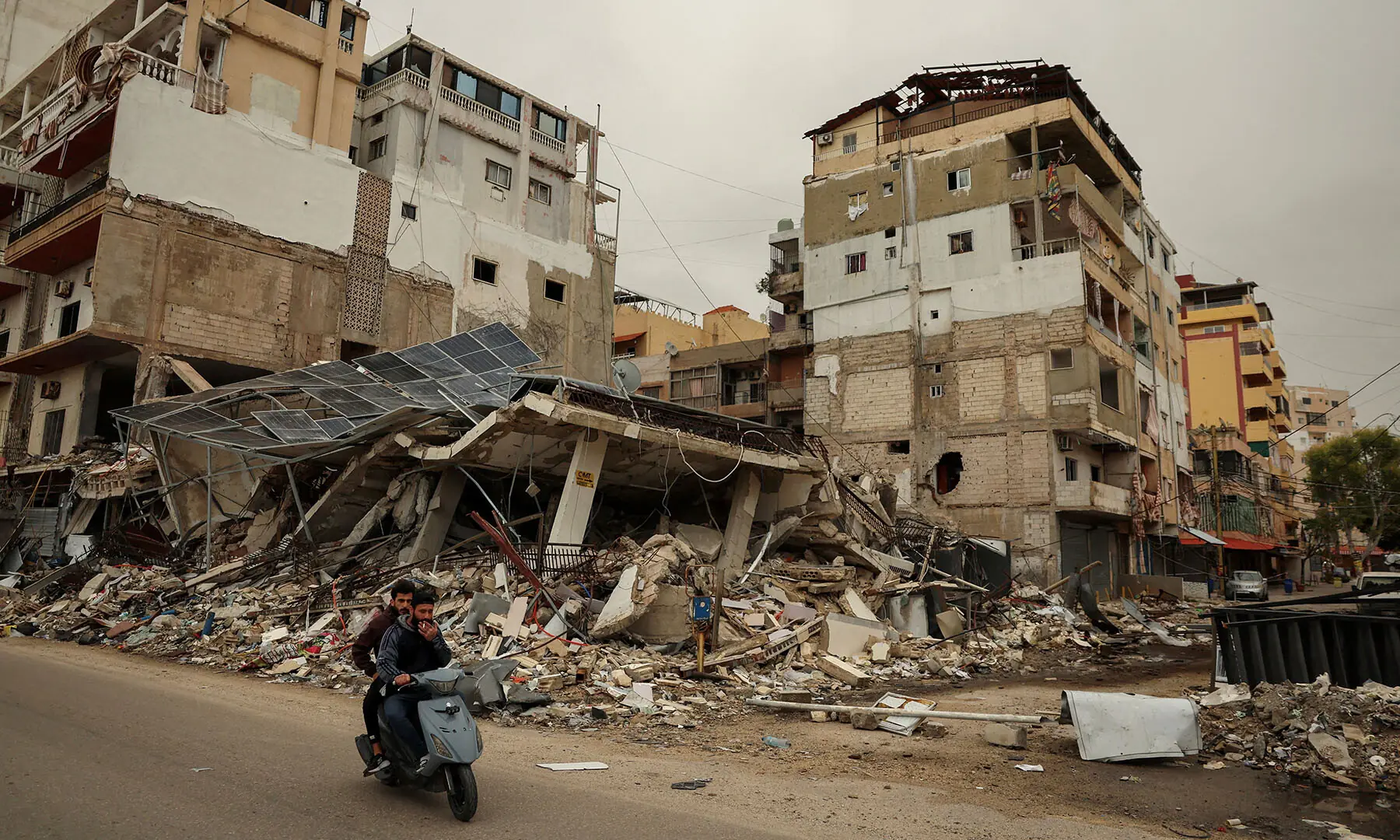
International reactions to Trump’s speech revealed growing divergence within the Western and allied camp. European leaders, including French President Emmanuel Macron and former German chancellor Olaf Scholz, publicly cautioned against the efficacy of military solutions and called for negotiated off-ramps. Simultaneously, a UK-led diplomatic initiative has begun to take shape involving European and other partners, notably excluding the United States, in an effort to explore alternative pathways to the reopening of the Strait of Hormuz.
At the same time, China attributed responsibility for the worsening crisis and disruption in the Strait of Hormuz to US and Israeli actions, urging an immediate ceasefire. Gulf states on their part were quietly reassessing their strategic posture amid concerns that the conflict, which is increasingly being seen as externally driven, was imposing disproportionate risks on their own economic and security environments.
The economic fallout of the war intensified further after Trump’s speech as oil prices rose sharply and maritime insurance costs escalated in view of the Strait of Hormuz remaining effectively contested, reinforcing the view that economic disruption, rather than purely military outcomes, is likely to be the decisive factor shaping the eventual course of the conflict.
Overall, the happenings of Day 34 confirmed that Trump’s speech entrenched a self-reinforcing escalation dynamic in which neither side sees immediate incentive to compromise. US and Israeli forces continued to apply sustained military pressure, while Iran retained sufficient asymmetric capability to impose costs and maintain strategic leverage, particularly through control over critical energy chokepoints.
With no credible diplomatic breakthrough in sight and parallel diplomatic efforts struggling to gain traction, the conflict is set to continue along its current path of high-intensity attrition. The immediate outlook is being shaped by the interplay between Iranian retaliation, allied military operations, and the mounting economic consequences that are increasingly defining the stakes of the war.
Header image: A camera screen shows US President Donald Trump speaking during a televised address on the conflict in the Middle East from the Cross Hall of the White House in Washington, DC on April 1. — AFP
